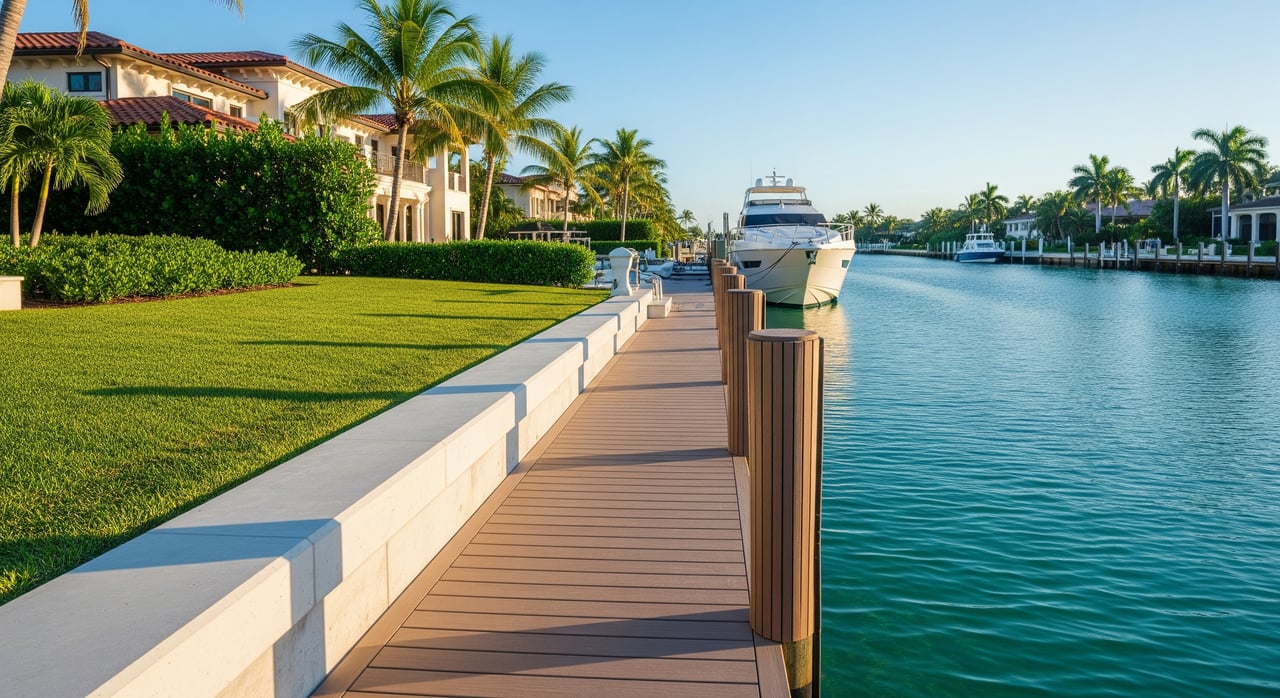
Shopping for a Boca Raton waterfront home and wondering if your boat will actually work at that address? You are not alone. Between seawalls, dock types, boatlifts, draft, and bridge clearances, there is a lot to assess before you fall in love with a view. This guide breaks down the basics so you can match the right property to your boating lifestyle, avoid expensive surprises, and plan your next steps with confidence. Let’s dive in.
Boca Raton waterways at a glance
Boca Raton waterfront homes sit on a mix of small residential canals, larger canal networks, the Intracoastal Waterway, and routes to the Atlantic via the Boca Raton Inlet. Each setting influences water depth, exposure to waves, and how quickly you reach open water.
Many canal-front homes connect to the Intracoastal, then out the inlet. Your travel time depends on canal layout, fixed bridges, and local speed or no-wake zones. Shoaling, which is the build-up of sand and silt, can shift depths in canals and inlet approaches, especially after storms. Tides in South Florida are modest, but a foot or two can be the difference between clearing a bridge or bumping bottom at low water.
The bottom line: you should verify the depth and bridge clearances on your route at low tide, then match those constraints to your boat or your boating plans.
Seawalls: what to know
A seawall, sometimes called a bulkhead, is the vertical structure along the shoreline that protects the yard from erosion and defines the edge of the property. In Boca Raton’s canals and along the Intracoastal, seawalls are common and can be one of the most important components of a waterfront home.
Common materials
- Concrete panels and caps are common and durable when properly built.
- Steel sheet pile provides rigidity but needs protection from corrosion.
- Vinyl sheet pile resists corrosion, and performance depends on installation quality.
- Older timber walls still exist in many neighborhoods and may be near the end of their useful life.
- Riprap, a layer of rock, is less common on narrow residential canals but can be part of a shoreline protection approach.
Signs of wear and risk
Seawalls fail in several ways. You may see cracks, leaning, or settlement of the cap. Look for sinkholes or loss of soil just behind the wall, exposed or corroded tiebacks, and damage from vessel impacts. Scouring at the base can happen where boat wakes reflect off the wall. After storms, a careful inspection is smart.
A failing seawall can lead to land loss, unsafe conditions, and big repair bills. When you evaluate a property, ask for documented condition, recent repairs, warranties, and permits for any work done.
Maintenance and ownership
Most private seawalls are the owner’s responsibility. Some associations or municipalities have rules or shared responsibilities for canal edges, so review deed language, HOA documents, and city guidance. Routine care includes keeping drainage away from the wall, monitoring for cracks or voids, and addressing corrosion or marine-borer damage early. Replacement or major repairs are significant capital projects, and site access can drive cost as much as materials.
Dockage and boatlift options
Your dock and lift choices affect daily convenience, maintenance, and what size boat you can keep at home. Permits and local rules also shape what is allowed on a given lot.
Dock types
- Fixed pile-supported docks offer solid walking surfaces and handle heavier loads. They work well with our small tidal range but require proper pilings.
- Floating docks rise and fall with the tide, which helps with access. They are modular and can be a good fit in certain canal conditions.
- Finger piers extend from the seawall for side-berthing. T-heads offer a crosspiece at the end for easier docking and turning.
- Davits or small hoists can handle dinghies or small center consoles where a full lift is not practical.
- Boathouses and full covers face strict limits, especially along the Intracoastal and in regulated areas. Many locations restrict or prohibit them.
Boatlift choices
- Cradle and platform lifts support the hull out of the water, reducing fouling and maintenance.
- Vertical or hydraulic lifts handle heavier boats and varying water levels when designed correctly.
- Floating or pontoon lifts can be adaptable and less invasive, depending on site conditions.
Lift sizing depends on vessel weight, beam, and draft. Proper pilings, electrical service, and anchoring are essential for safety and insurance.
Rules, setbacks, and upkeep
New docks, major repairs, lifts, dredging, and shoreline alterations typically require permits from the city, county, state, and sometimes the U.S. Army Corps of Engineers. HOAs often have rules for size, materials, and lighting. Private moorings can be restricted. Build a routine inspection habit for hardware, piles, decking, and lift motors or winches, since saltwater accelerates wear.
Draft, depth, and bridges
Draft is the vertical distance from the waterline to the lowest point of your hull. It is the key factor that determines if your boat can safely transit your canal and the route to the inlet.
Matching boat to property
Many Boca canals are shallow at low tide. Center consoles and bay boats, with shallower drafts, often work well in canals and on the Intracoastal. Sailboats and large sportfishing yachts may require deeper basins or marina slips. Long boats can be tricky to turn in narrow canals, which can make a lift or off-site mooring the better choice.
When in doubt, obtain low-tide depth information and consider a local marine survey or boatyard consultation. Verify that the turning basin and dock layout fit your boat’s length and handling needs.
Bridge clearance and routes
Fixed bridges have a listed vertical clearance, often measured at a specific tide level. Movable bridges open on signal or a schedule set by the Coast Guard. Your mast height or T-top clearance may limit certain routes. Always confirm clearances along your exact path to the inlet, and plan around low or high tide when needed.
Shoaling and tides
Shoaling can create shallow spots that shift with storms and season. Charted depths give a baseline, but conditions change between surveys. Local marinas, tow operators, and neighboring boaters can provide current intelligence on low-tide pinch points. Even with a small tidal range, an extra foot can make a big difference getting over a bar or under a bridge.
Permits, insurance, and records
A clean paper trail matters for resale, liability, and future projects. Expect to work with several agencies depending on the scope of work and your location on the water.
Permitting basics in Palm Beach County
Projects that usually require permits include new seawalls or replacements, dock construction, lift installation, dredging, and any work seaward of the mean high water line. Plans may be reviewed by city and county officials, state environmental agencies, and the U.S. Army Corps where navigable waters are involved. Timelines and conditions vary and can include environmental mitigation or neighbor notifications.
If previous owners made changes without permits, it can complicate insurance, refinancing, or resale. Always verify the permit history with the City of Boca Raton and Palm Beach County before you close.
Insurance and flood considerations
Seawalls help reduce erosion and local wave action, but they do not remove flood risk. FEMA flood zones, base flood elevation, and elevation certificates still drive flood insurance needs and pricing. Docks, lifts, and other water structures may require specific endorsements on your homeowner’s policy. Insurers often ask for maintenance records or recent inspections, so keep documentation organized.
Riparian rights and responsibilities
Most waterfront properties carry riparian rights, which generally include reasonable access to the water. Exact rights can be shaped by deed language, the position of the bulkhead, and public or utility easements. Confirm what is allowed for structures like docks or boat canopies under local ordinances and HOA rules.
Buyer checklist for waterfront due diligence
Use this practical list to focus your property tour and contract period.
- Request recorded deed language about shoreline and riparian rights.
- Ask for permits and approvals for the seawall, dock, lift, dredging, or shoreline work.
- Obtain as-built drawings, contractor invoices, and any transferable warranties.
- Review recent structural inspections or marine survey reports.
- Seek bathymetric soundings or canal depth records, ideally at low tide.
- Check HOA or municipal rules on dock size, lifts, lighting, and usage.
- Verify permit history with the City of Boca Raton and Palm Beach County.
- Consult a licensed marine contractor or structural engineer if there are visible concerns.
- Confirm FEMA flood zone and request the property’s elevation certificate.
- Talk to nearby marinas or boatyards about shallow spots and typical drafts for the area.
Working with a local advisor
Choosing a Boca Raton waterfront home is about more than curb appeal. It is about how you plan to use the water every day. The right advisor helps you align property features with your boat, your route to the inlet, and your maintenance and permitting plans. That means organizing records early, coordinating the right inspections, and connecting you with trusted local marine pros when needed.
If you want a concierge buying experience backed by local knowledge and a national platform, reach out to Richard Lemon. We will help you confirm the details that matter, from seawall condition to bridge clearance, so your next Boca Raton home works as well on the water as it looks from the porch.
FAQs
What is a seawall and why it matters for Boca Raton buyers
- A seawall is the shoreline structure that protects your yard from erosion, and its condition directly affects safety, maintenance costs, and property value.
How to match boat draft to a Boca Raton canal home
- Verify low-tide depths along your route, then choose a boat with draft equal to or less than the shallowest segment, leaving a safety margin for shoaling and seasonal changes.
Do you need a permit for a boatlift in Palm Beach County
- Yes, most lift installations and substantial dock work require city and county permits, and may also need state or federal approvals depending on location and scope.
Who maintains a seawall or dock at a Boca Raton property
- Usually the riparian property owner maintains private structures, but HOA rules or municipal arrangements can change responsibilities, so review governing documents.
Can a seawall lower flood insurance costs in Boca Raton
- No, a seawall does not remove flood risk or change FEMA flood zone requirements, and you should evaluate flood insurance needs based on maps and elevation data.
Are boathouses or full boat covers allowed on the Boca Intracoastal
- Coverage structures are often restricted or prohibited along the Intracoastal and in many coastal zones, so check local ordinances and HOA rules before planning one.
How often should you inspect a dock and lift in Boca Raton saltwater
- Inspect seasonally and after major storms, checking piles, hardware, decking, electrical systems, and lift components for corrosion, wear, and proper operation.